A Practical Checklist For Planning Multi-Location Campaigns
Product sampling roadshows give brands a valuable opportunity to put their products directly into consumers’ hands. Rather than relying solely on digital advertising or traditional media, a well-planned sampling campaign creates a face-to-face interaction where people can see, taste, try and experience a product for themselves.
When that activity is delivered across multiple locations, the potential reach becomes even greater. But roadshows also introduce additional considerations around logistics, staffing, stock, venues, security and compliance.
Whether you are planning a short regional tour or a nationwide product sampling roadshow, having a clear plan from the outset can make the difference between a campaign that simply travels and one that delivers measurable results.
Here is a practical checklist to help you plan.
1. Define Your Campaign Objectives
Before deciding where your roadshow will go, establish what you want it to achieve.
Are you looking to:
- Increase product awareness
- Bring a new product to the market
- Generate interest to encouraging purchase
- Reach a specific demographic
- Support a retail launch
- Collect consumer feedback
- Build brand engagement
- Generate leads or sign-ups
- Create content and social media opportunities
Your objectives should influence every subsequent decision, from location selection and staffing to the type of sampling experience and the metrics you track.
For example, a campaign designed to drive immediate product trial may prioritise high-footfall retail locations, while a campaign focused on brand awareness might benefit from festivals, sporting events, universities or other environments where your target audience naturally spends time.
2. Identify Your Target Audience
A successful sampling campaign is not simply about reaching as many people as possible. It is about reaching the right people.
Build a clear picture of your target consumer and consider:
- Where do they live?
- Where do they work, shop or socialise?
- What events do they attend?
- What times and days are they most likely to be available?
- What locations are relevant to the product?
- What would make them stop and engage?
Location strategy should be based on audience behaviour rather than simply choosing the largest cities.
For some brands, a combination of shopping centres and retail locations may work best. For others, universities, festivals, workplaces, sporting venues or community events may provide stronger opportunities for engagement.
3. Build A Multi-Location Schedule
Once you understand your audience, create a realistic campaign schedule.
Consider:
- Number of locations
- Number of activation days per location
- Travel distances between stops
- Set-up and breakdown time
- Venue access restrictions
- Event opening hours
- Staff travel and accommodation
- Vehicle requirements
- Storage and replenishment
- Contingency time
Your schedule will need to work in execution and not just on paper. You should allow time for delays, travel, setting up and packing down, staff rest periods and in particular the working hours of the driver which fall under regulations.
A multi-location roadshow involves more than travelling from A to B. Equipment needs to be loaded, samples need to be replenished, teams need to be briefed and venues need to be prepared. Allowing sufficient time between locations helps protect the consistency of the campaign.
4. Choose Locations Strategically
Location can have a major influence on sampling performance, but also on budget.
Look for environments that combine relevance, accessibility and footfall. Depending on the campaign, this could include shopping centres, retail stores, festivals, sporting venues, office parks, universities, town centres and other high-footfall environments.
Our clients' product sampling campaigns have been delivered in a variety of environments, including sporting venues, shopping centres, festivals, office parks and mass retailers.
For each proposed location, assess:
- Expected footfall
- Audience profile
- Peak periods
- Sampling permissions
- Space available
- Vehicle access
- Power and other facilities
- Weather considerations
- Nearby competitors
- Opportunities for retail conversion
- Rental costs and any commissions
It is also worth considering whether your campaign needs a standardised footprint at every location or whether the activation should adapt to different environments.
5. Plan The Sampling Experience
The sample itself is only one part of the experience.
Think about what happens from the moment someone notices your activation to the moment they walk away.
A strong sampling journey might include:
ATTRACT → ENGAGE → EDUCATE → SAMPLE → CONVERT → MEASURE
Your Brand Ambassadors should have a clear understanding of the product, its key benefits and the desired call to action.
Keep the interaction simple and natural. Consumers should not feel as though they are being subjected to a sales presentation simply because they accepted a sample.
Depending on the campaign, you might also incorporate demonstrations, competitions, digital interactions, QR codes, promotional offers or purchase incentives.
6. Get Your Logistics Right
Logistics become significantly more complex as the number of locations increases.
Create a detailed logistics plan covering:
- Vehicles & trailers
- Equipment
- Sampling stock
- Promotional materials
- Refrigeration or specialist storage requirements
- Furniture
- Branding
- Waste management
- Cleaning
- Loading & unloading
- Location access times
- Overnight storage & security
- Replenishment
- Travel routes
- Emergency contacts
For larger roadshows, working with an experienced experiential partner can help centralise these moving parts.
At BMG, we combine roadshow production with logistics, haulage, event staffing and on-the-road campaign management. Our touring teams are experienced in planning campaigns designed to operate across multiple locations.
7. Recruit & Brief The Right Brand Ambassadors
Your staff are the face of the campaign.
For product sampling, they need to be approachable, enthusiastic and confident speaking to consumers. They should also understand the product well enough to answer questions accurately.
Before launch, establish:
- Staff numbers per location
- Roles & responsibilities
- Uniform & appearance guidelines
- Product knowledge
- Key talking points
- Sampling procedures
- Engagement approach
- Data capture requirements
- Health & Safety procedures
- Escalation process
A consistent briefing process is particularly important when multiple teams are working across different locations. Consumers should receive the same core brand message whether they encounter the campaign in Manchester, Birmingham or London.
8. Consider Compliance & Safety
Sampling campaigns can involve food, drink, cosmetics, healthcare products or other regulated categories, so compliance needs to be considered early.
Depending on the product and activation, this could include:
- Product handling requirements
- Allergen information
- Age restrictions
- Responsible sampling procedures
- Hygiene standards
- Risk assessments
- Public liability insurance
- Venue requirements
- Local permissions
- Waste disposal
- Data protection
Build these requirements into the campaign plan rather than treating them as an afterthought.
9. Make Your Branding Work Across Every Locations
A multi-location campaign should feel like one campaign, even when it appears in many different places.
Your branding should be immediately recognisable and work consistently across:
- Vehicles
- Trailers
- Sampling counters
- Uniforms
- Signage
- Product displays
- Printed materials
- Digital screens
- Giveaways
- Social content
At the same time, consider the practical requirements of different venues. A large branded vehicle may work brilliantly at an outdoor event but may not be appropriate for a compact retail environment.
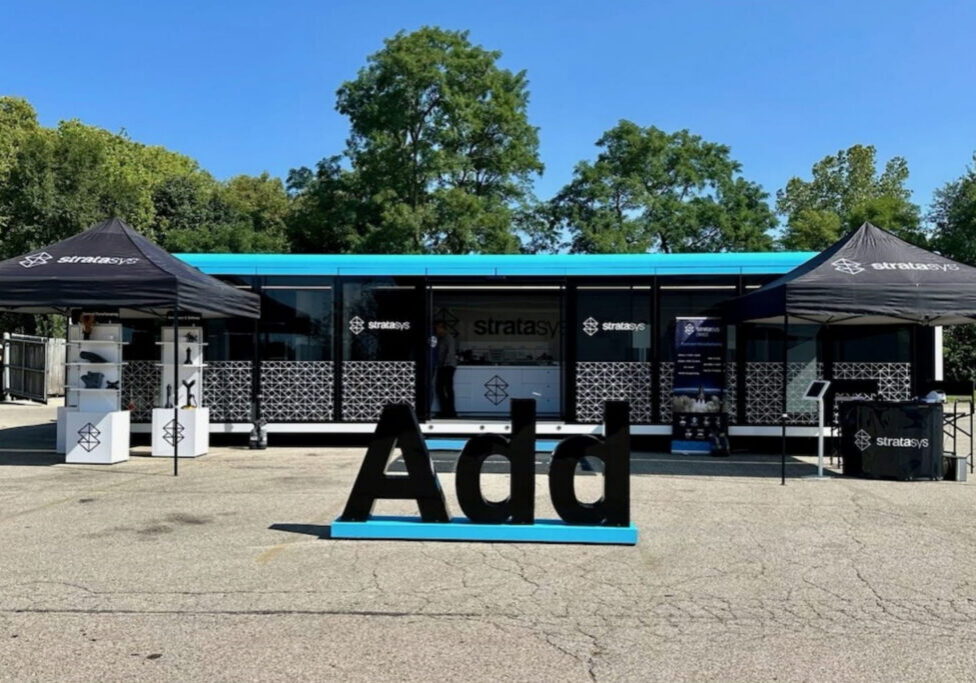
Mobile marketing vehicles and event trailers can provide a flexible way to create a recognisable campaign footprint while allowing brands to adapt the activation to different locations.
10. Plan Stock & Replenishment Carefully
Running out of samples is an avoidable problem — but it can happen quickly when multiple teams are working simultaneously.
Estimate stock requirements based on:
EXPECTED ENGAGEMENTS × SAMPLES PER ENGAGEMENT + CONTINGENCY STOCK
Also consider:
- Different product variants
- Promotional materials
- Packaging
- Storage conditions
- Sampling equipment
- Cleaning supplies
- Replacement uniforms
- Printed materials
Build a simple inventory system so the campaign team can see what has been distributed, what remains and what needs replenishing.
For larger campaigns, inventory reporting can also form part of the post-event reporting process.
11. Decide How You Will Measure Success
One of the biggest advantages of a structured sampling roadshow is the ability to collect campaign data alongside consumer engagement.
Your KPIs could include:
- Number of samples distributed
- Consumer interactions
- Meaningful engagements
- Conversion or purchase intent
- Leads generated
- QR code scans
- Competition entries
- Sign-ups
- Consumer feedback
- Social interactions
- Cost per engagement
- Retail sales uplift, where measurable
Do not wait until the end of the campaign to decide what counts as success. Set your reporting framework before launch and make sure every location records information in the same way. This makes it much easier to compare performance across the tour and identify your strongest locations.
12. Build In Flexibility
Even the best roadshow plan needs room to adapt.
Weather can change. Events can be cancelled. Footfall can be lower than expected. A particular location may outperform expectations and deserve additional activity.
Build contingency plans into your campaign, including:
- Alternative locations
- Weather contingencies
- Spare stock
- Backup equipment
- Flexible staffing
- Additional travel time
- Alternative dates
- Clear escalation procedures
The goal is not to eliminate every potential problem, it is to make sure the team knows what to do when something changes.
13. Review Performance Throughout The Campaign
A multi-location roadshow should not be treated as a series of disconnected events.
Review results throughout the campaign and ask:
- Which locations are performing best?
- Which audiences are most engaged?
- Which messages generate the strongest response?
- Are certain days or times outperforming others?
- Are sampling quantities appropriate?
- Are there operational issues that need fixing?
- Can successful tactics be replicated at upcoming locations?
This turns a roadshow into a learning programme as well as a marketing campaign.
14. Choose An Experienced Roadshow Partner
Managing a roadshow of any kind involves much more than arranging a branded vehicle and handing out information. This is even more the case with a multi-location product sampling campaign, given the additional costs involved in stock supply and distribution.
You may need support with strategy, location planning, venue management, staffing, logistics, production, transportation, compliance and reporting.
An experienced experiential marketing partner can bring these elements together under one campaign plan.
Brewco Marketing Group has many years experience in delivering experiential campaigns, product sampling programmes and roadshows across the UK, Europe and North America. Our services span concept development, event management, logistics, staffing and multi-location execution.
Product Sampling Roadshow Checklist
Before your campaign goes live, make sure you can tick off the following:
- Campaign objectives agreed
- Target audience defined
- Locations researched & approved
- Campaign schedule confirmed
- Venue permissions secured
- Logistics & travel routes planned
- Sampling stock ordered
- Storage & replenishment arranged
- Vehicles, trailers or activation equipment booked
- Brand Ambassadors recruited
- Staff training & briefing completed
- Risk assessments & compliance requirements completed
- Branding & promotional materials produced
- Measurement & reporting framework agreed
- Contingency plans prepared
- Post-event reporting process established
Make Your Next Product Sampling Roadshow Count
A successful multi-location product sampling campaign combines a compelling consumer experience with meticulous planning behind the scenes.
The strongest campaigns are designed around the audience, delivered consistently across every location and measured against clear objectives. When strategy, staffing, logistics and execution work together, a roadshow can create thousands of meaningful face-to-face interactions while giving brands valuable insight into how consumers respond to their products.
At BMG we deliver product sampling, experiential campaigns and roadshows at scale. Designed to connect brands with audiences in the real world. From individual activations to multi-location tours, we can support the planning and practical delivery required to keep campaigns moving.
Considering a product sampling roadshow? Talk to us about your campaign before you start planning.


Click To Watch
Who We Are
From long-term experiential brand strategy to overall campaign execution and management, Brewco Marketing Group engages audiences where they work, live and relax.